
Facebook Marketing: The Complete Guide for 2026
Despite any grumblings about obsolescence, Facebook is still the leading global social media platform. That alone calls for a spot in your marketing strategy.
Now, consider Facebook’s audience targeting, ad platform, and analytics, and it becomes clear that Facebook marketing is worth investing your time and budget. For a broader view of how this fits into your overall strategy, check out our guide to building a social media marketing strategy.
In this guide, we’re going to take a ground-up approach and cover everything you need to know about Facebook marketing. From planning to producing to publishing and promoting, you’ll get an expert explanation of what it takes to be successful with marketing on Facebook. If you’re also running campaigns on other platforms, you may want to read our posts on Instagram marketing best practices and creating high-converting Facebook ad campaigns.
What is Facebook marketing?
Facebook marketing is the process of promoting a brand, business, or product on the Facebook platform with the goals of driving website traffic, increasing online visibility and engagement, and converting customers.
The overall strategy of Facebook marketing includes many tactics, like creating a Facebook business page, publishing organic content, buying paid ads, and more. To understand how Facebook fits into the bigger picture of your campaigns, see our article on planning a content calendar for social media.
We’ll cover each of these in depth.
Facebook Marketing: The Complete Guide for 2026
Despite any grumblings about obsolescence, Facebook is still the leading global social media platform. That alone calls for a spot in your marketing strategy.
Now, consider Facebook’s audience targeting, ad platform, and analytics, and it becomes clear that Facebook marketing is worth investing your time and budget.
In this guide, we’re going to take a ground-up approach and cover everything you need to know about Facebook marketing. From planning to producing to publishing and promoting, you’ll get an expert explanation of what it takes to be successful with marketing on Facebook.
What is Facebook marketing?
Facebook marketing is the process of promoting a brand, business, or product on the Facebook platform with the goals of driving website traffic, increasing online visibility and engagement, and converting customers.
The overall strategy of Facebook marketing includes many tactics, like creating a Facebook business page, publishing organic content, buying paid ads, and more.
We’ll cover each of these in depth.
What are the types of Facebook marketing?
There are many ways to reach your target audience on Facebook, including:
Organic Facebook marketing: This includes posting content to your Facebook page, like updates, photos, and offers, without paying to promote it. Your reach depends on how many people follow you and how often Facebook’s algorithm decides to show your posts.
Paid Facebook marketing: This involves running ads or boosting posts by putting money behind them through the Meta Ads platform. This helps Facebook show your content to a targeted audience within and beyond your existing followers.
Community marketing: This refers to building or participating in Facebook groups to connect with potential customers through conversation rather than promotion. Think about local neighborhood groups, industry communities, or a group you create around your business.
Event marketing: This is using Facebook Events to promote in-person or online happenings, like grand openings, sales, classes, and seasonal events, so local people can find, RSVP to, and share them.

This craft event, advertised on Facebook, is co-sponsored by two local businesses in Manchester, NH.
Why does Facebook marketing matter?
Facebook marketing is important for businesses because it has the audience, engagement, and features to reach your unique target audience in a meaningful way.
Facebook has a huge audience
Facebook has over 3 billion active monthly users and 2.1 billion daily active users globally. These active users spend an average of 67 minutes daily on the platform.
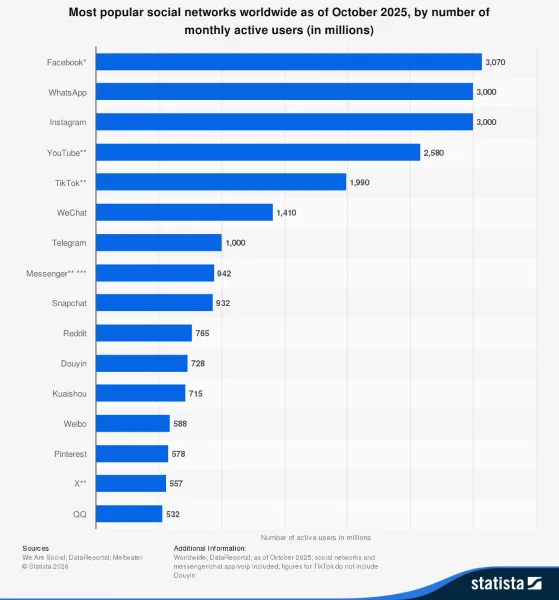
A slight lead, but a lead for Facebook nonetheless.
That audience spans most demographics. Here’s how it breaks down:
56% of Facebook users identify as male.
The largest age group is 25-35, accounting for 18% of global users.
Users 65+ are most likely to have used Facebook recently.
More than 50% of all adult users report monthly use.
279 million Facebook active users are in the US.
India has the most active Facebook users at 581.6 million.
Facebook is a central location for sports fans, according to Meta research.
If any of these characteristics align with your ideal audience, then a Facebook marketing strategy is worth the investment.
Facebook users are active consumers
The millions of people who use Facebook aren’t just scrolling. They’re searching for and engaging with brands.
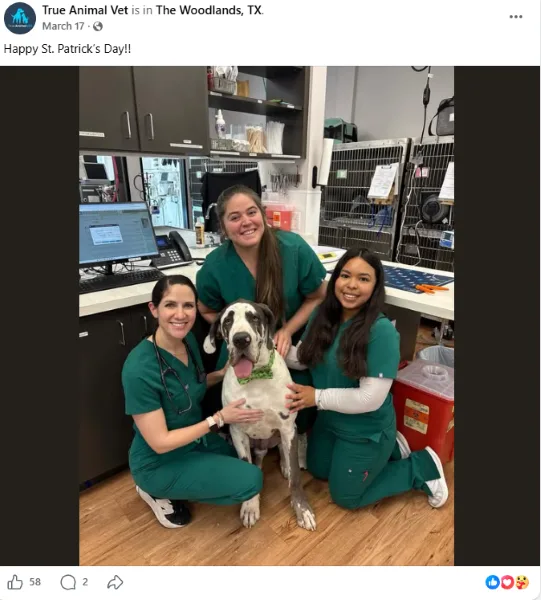
People don’t just see your brand on Facebook; they engage with it.
For instance, according to Sprout Social data, 40% of Facebook’s users go to the platform to discover new products. That’s a good place for your brand to be.
Facebook has powerful targeting features
Facebook has next-level targeting capabilities, and these are one of the platform’s biggest differentiators. Businesses can define audiences based on super detailed criteria, including location, age, interests, online behaviors, job roles, and even past behaviors with your business (think visiting your website or clicking on your content).

This level of precision is difficult to achieve with other forms of advertising, even on other social media platforms. That means when you’re advertising on Facebook, you’re spending your budget on people who are more likely to be interested in your brand. Increasing efficiency and improving ROI? Win, win.
Facebook gives local businesses a boost
If you’re running a local business, Facebook offers tools specifically designed to reach your audience when they’re nearby. With Facebook ads for local businesses, you can target promotions to a defined geographic radius and advertise for local events.

If your business is geographically based, Facebook has features to help you find customers.
Also, it’s worth noting that many users rely on Facebook to discover local services, read reviews, and stay informed about events. You still need to have a website that’s accurate, but it’s helpful to keep your Facebook presence up-to-date. An active presence and a full, fresh Facebook Business page increase your chances of being chosen.
Facebook marketing is flexible
Facebook marketing can evolve alongside your business. You can start by setting up a Facebook Business page and keeping your information up-to-date. Then you could add an organic posting strategy. When you’re ready, you can test out Facebook ads and then invest in the ones that work. If community marketing is working for your business, you can trial this on Facebook, too.
Plus, Facebook is part of the Meta ecosystem, which includes Instagram. The possibilities for expanding your marketing strategy are nearly endless. And yet, you can start small and see success there, too.
How to create a Facebook marketing strategy
To create a Facebook marketing strategy that helps you grow, you’ll need to set goals, define your audience, get familiar with the tools, and make a plan to track it all.
It’ll be good to remember that your Facebook marketing strategy will be specific to your industry, your business, your audience, and yes, even your bandwidth. The most effective strategy will be the one that you can keep up with.
Here’s how to develop a Facebook marketing strategy that works for your business.
Set up your Facebook Business Page
If you haven’t already set up your Facebook Business Page, that’s the first step. (If you already have this, feel free to skip ahead—as long as you’re confident you’ve got all of the core elements covered.)
Think of your Facebook Business Page as your digital storefront. It’s not only the foundation of your Facebook presence, but it can also influence what people see when they search for you on Google.
Let’s make sure you’re maximizing this valuable resource, which means including:
A profile photo: Often your logo, but could also be a flagship product.
A cover image: This can highlight your offer, display a brand message, show your storefront, feature products, or even be a group photo of your team.
About section: This section should clearly explain what you do, who you serve, and how to take the next step.
Contact information: Make this section accurate, easy-to-find, and up-to-date. This should also include any relevant business hours.
Call-to-action button: Whether it’s “Book Now,” “Send Message,” or “Shop Now,” make sure you’re letting your audience know how to follow up with you.
Reviews: Encourage customers to leave reviews for your business and reply to them often.
Pinned post: Don’t sleep on this ability to pin a post to the top of your feed. You can include your brand story, a current promotion, or important updates.
A complete, optimized page provides all of the information users are looking for, which signals to your audience that you’re a legitimate, trustworthy business.
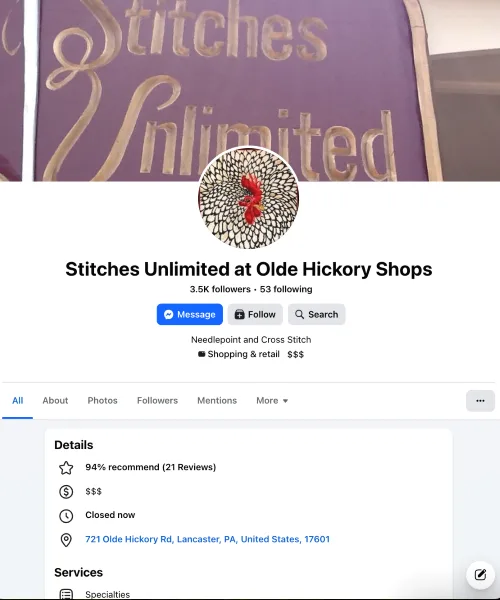
Stitches Unlimited at Olde Hickory Shops in Lancaster, PA, has a straightforward Facebook Business Page that’s clearly working since they’ve attracted 3,500 followers.
Identify your target audience
The more clearly you define your target audience, the easier it becomes to create content that resonates and ads that convert.
Start by narrowing down the basic demographics of your followers, like age, location, and gender identity, using Facebook Audience Insights. Then, you can go deeper:
See who is engaging with your content.
Note what interests your followers list.
Review your Facebook Lookalike Audiences.
This step isn’t skippable because Facebook’s algorithm prioritizes relevance. If your content connects with the right people, it’s more likely to be shown to more users. The same applies to your ads. When you understand your audience, your messaging becomes sharper, your engagement improves, and your marketing becomes far more efficient.
Define your goals
Before you create content or run ads, you need to settle on what success actually looks like for you. Are you trying to generate more leads? Drive website traffic? Increase brand awareness? Boost sales?
These are all possible with Facebook, but each of these goals is going to require a slightly different approach. So to avoid wasting any time or budget, you need your goals in mind before getting started.
Remember, strong goals are SMART (Specific, Measurable, Achievable, Relevant, and Time-bound).
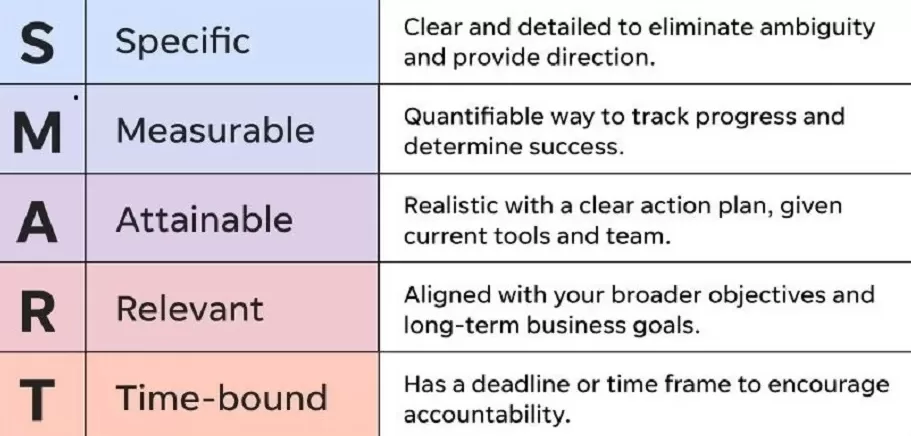
Instead of saying “get more engagement,” aim for something like “increase website clicks by 20% in the next 60 days” or “generate 30 new leads this month.” This level of specificity helps you prioritize your own content or ads, plus it gives you an important benchmark to evaluate performance, so you know whether your strategy is actually working or needs adjustment.
Develop a content calendar
When it comes to sharing content, consistency is key. That’s why we recommend developing a content calendar to help you stay organized, maintain a steady posting schedule, and ensure you’re delivering a balanced mix of content.

A content calendar helps you visualize and track your social media activities within the context of your overall marketing program.
A strong content calendar typically includes a variety of post types—more on those shortly—and with different content, such as educational tips, behind-the-scenes insights, customer testimonials, or promotional content.
Variety prevents your page from feeling overly sales-focused or feeling stale to followers. And planning all of this ahead of time also allows you to tie content into seasonal trends, events, or campaigns, making your marketing feel more timely and intentional rather than reactive.
Test Facebook ads
Organic reach can only take you so far, which is why testing ads is a critical step. You’re going to get the most out of your Facebook marketing strategy when you’re leveraging organic growth and paid advertising.
Remember how we said to test Facebook ads? That word choice is intentional. You don’t need a massive budget to get started, and you don’t need to commit to a long-term plan. We’d recommend beginning by promoting your content that’s already performing well organically. That’s a strong indicator that it’s working for your audience.

Facebook’s advertising tools help keep your ads looking great and targeted properly.
From there, you can start experimenting with different messages, different visuals, and even different audiences to start building out your strategy.
Here are some resources that will help you run and optimize your Facebook ad strategy:
How to Run Facebook Ads in 8 Simple Steps
Facebook Ads Best Practices (+Tips for Success)
16 Awesome Facebook Ad Examples (& Why They Work)
Types of Facebook posts for your content strategy
Facebook offers several types of content you can use to engage your audience. Which you choose will depend on the types of things you sell, who your audience is, and your core competencies in creating content (are you a video wiz, a crack copywriter, etc.).
Here are the types of Facebook posts you can use in your marketing strategy.
Image posts
Images are one of the most common and versatile Facebook post types. These kinds of posts include a single photo or graphic, and they’re often paired with a text-based caption.
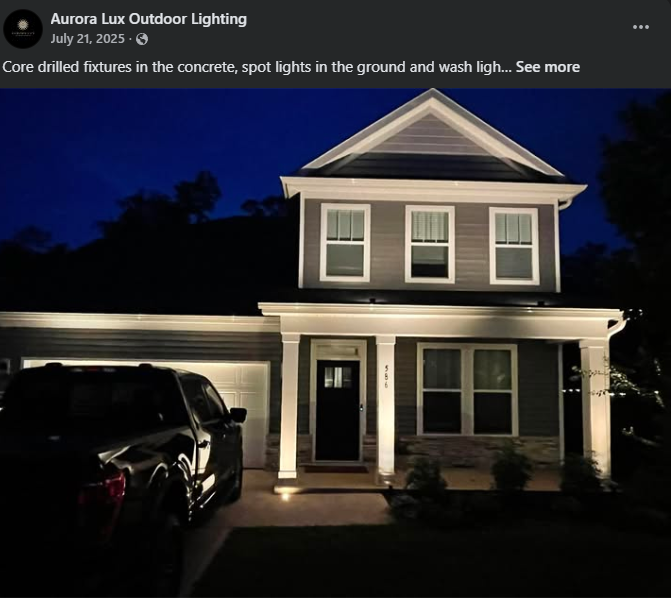
The best image size is typically 1080 × 1080 pixels (square) or 1200 × 630 pixels (landscape) for optimal display across devices. In terms of photo content, that’s up to you. Product photos, branded graphics, behind-the-scenes images, even common quotes or memes. Consider what works for your brand personality, and then figure out what your audience responds to.
Video posts
Video ads and posts are pre-recorded clips uploaded directly to Facebook. These videos should be vertical (4:5 or 9:16) or square formats, because most users are watching on phones. While Facebook allows up to 240 minutes, short-form videos generally perform best, so stick to 15-60 seconds. For videos, you can include tutorials, product demos, testimonials, or storytelling content.

Source
Text posts
Text posts are simple posts without images or videos, relying entirely on written content. While they don’t have strict specs, shorter, conversational copy or thought-provoking questions tend to perform best. These posts often include opinions, tips, questions, or storytelling. They work well for personal brands, consultants, and community-driven businesses that want to spark conversation and interaction. The goal is to drive comments and discussions rather than visual engagement.
Carousel posts
Facebook carousels allow you to share multiple images or videos, called cards, within a single post that users can swipe through. These typically include 3-12 cards, and each has its own headline and description. The recommended size is 1080 × 1080 pixels per card.
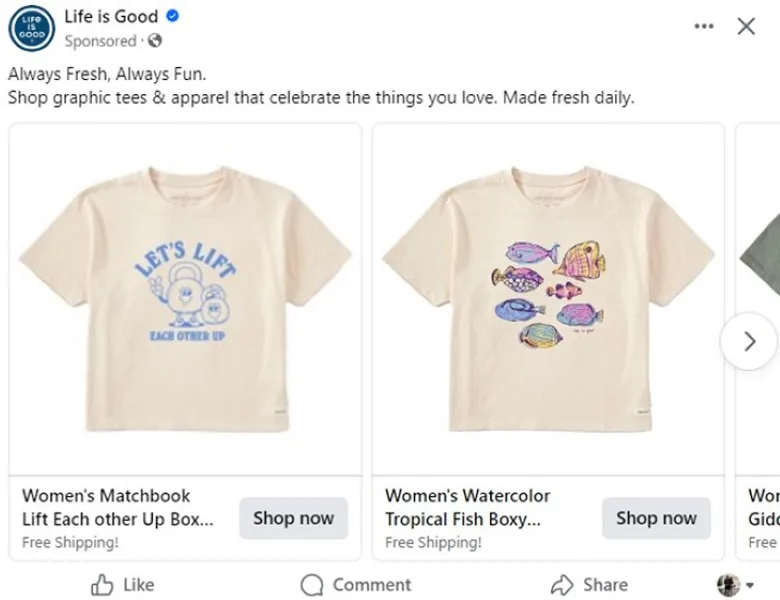
Carousels make great Facebook ads or organic posts.
Carousel posts are particularly effective for showcasing multiple products, highlighting features, telling a step-by-step story, or presenting before-and-after transformations. The format encourages deeper engagement and encourages the user to keep scrolling—so make the most of this.
Reels
Reels are short-form, vertical videos designed for quick, engaging consumption. These videos should have a 9:16 aspect ratio, and Facebook allows for up to 90 seconds, though shorter clips of 7-10 seconds tend to perform best. When you’re thinking of content for reels, it should be quick and consumable.

Source
The goal for this type of Facebook post is to capture the attention of your audience as they scroll through multiple videos. Because of that, Reels feature quick tips, behind-the-scenes content, or short, funny, entertaining clips. Bonus points for trending audio.
Stories
Just like Instagram Stories, Facebook Stories are full-screen, vertical posts that disappear after 24 hours. These should also have a 9:16 aspect ratio with 1080 × 1920 pixels. Stories can include images, short videos, text overlays, stickers, and interactive elements, like polls or “add yours” features.
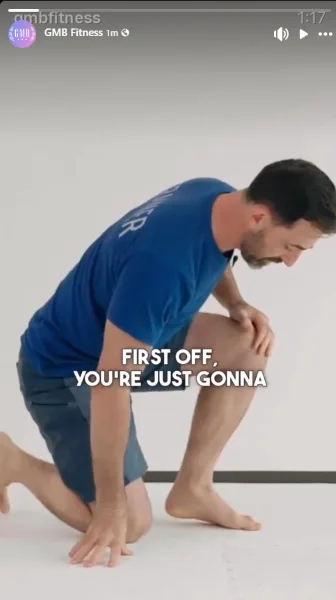
Stories are best for time-sensitive content, daily updates, quick announcements, promotions, or casual behind-the-scenes moments. But this doesn’t mean they should be easily overlooked. Stories are a great way for your brand to stay top-of-mind without feeling like you’re spamming your followers.
Facebook Live
Facebook Lives are real-time broadcasts that allow businesses to interact with viewers as they watch. There are no strict resolution requirements for this type of Facebook post, but you do want to make sure you have a stable connection and stick to a vertical or horizontal framing. No one wants to get dizzy watching you.
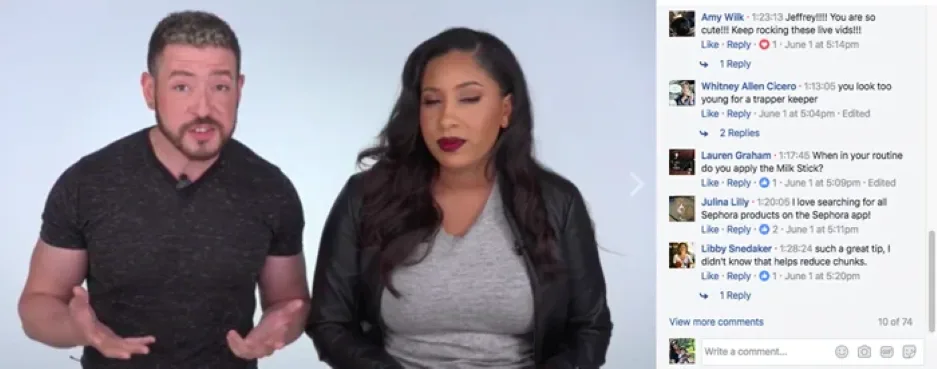
You don’t have to go live often, but it might be worth experimenting to see if your audience is interested. Your Facebook Live content can include Q&A sessions, product tutorials, interviews with fun guests, or even bigger events, like a webinar or panel.
How to run paid ads on Facebook
Paid Facebook ads give you access to precise targeting and reach beyond the people who already follow you. Use these steps to start using this valuable marketing channel.
Get set up
To get started advertising on Facebook, the first thing you need to do is create a Business Manager account. This is the place where you’ll manage your ads and billing, and, once you connect it, your Facebook Business page, too.
Then, make sure that you install the Meta Pixel. This is a piece of code that you add to your website that tracks your site visitors and their actions. This tracking helps you optimize ads and retarget users who have already interacted with your website.
Choose your ad type
Once again, Facebook shows its versatility for marketers. Here are the types of Facebook ads that you might end up using:
Image ads: These are simple ads with a single image. They’re easy to set up, cost-effective, and great for quick promotions.
Video ads: These ads can use short-form or longer-form videos to tell a story, offer behind-the-scenes content, or feature a demonstration of your product or service. Videos are great for engagement, and this ad type can appear in feeds or in Stories.
Carousel ads: Carousel ads feature multiple images or videos that users swipe through. Each card can have its own linking, making it great for products and shoppable posts.
Collection ads: These ads feature a main video or image with a product catalog clickable underneath, opening a full-screen experience (which is called an instant experience).
Instant experience ads: These ads are full-screen, mobile-optimized, and interactive. They can include video, images, and CTA buttons, and they’re primarily designed for immersive storytelling.
Messenger ads: These ads appear directly in Facebook Messenger, encouraging users to start conversations with your brand. Messenger ads are going to work best for lead generation.
Lead ads: Facebook Lead Ads collect user information directly within the platform using forms with pre-filled data for signed-in accounts.
Dynamic ads: If you create a product catalog on Facebook, Dynamic Ads will automatically promote products to people who have shown interest. These are excellent for retargeting.
Local awareness ads: These ads are ideal for brick-and-mortar businesses or in-person events because they allow you to target nearby audiences.
Stories ads: These are full-screen vertical ads in Stories, and they can be static images or videos.
Advantage+ ads: Meta’s Advantage+ helps you get more for your budget and your Facebook ads with AI-driven tools. You can use AI to optimize audience targeting, ad placements, and even your ad creative. If you’re looking for automation and efficiency, this is a great choice.

A simple, effective Facebook image ad from Gorelik Dentistry.
Create your first campaign
Once your account is set up, you’re ready to create your first campaign. In the Ad Manager, click on the “Create” button and select your campaign objective. You’ll choose traffic, engagement, leads, or sales.
Next, define your audience for your Facebook ad targeting. This might mean selecting demographics to target, like location, age, or gender identity. You might opt to create a custom audience or leverage Meta’s Lookalike Audiences to reach people similar to your following.
After your audience is all set, you’ll confirm your budget by setting a daily limit or a total lifetime budget, defining a schedule for your ads to run, and choosing the placements for your ads, like Facebook Feed, Stories, or Messenger.
Finally, you’ll set up the ads themselves. That means uploading the images or videos, writing your headlines and other text, including your website link, and adding a relevant CTA. Once you review and publish, you’ll check back in to track and measure progress—which we’ll talk about more in just a minute.

A Facebook video ad from Buckley Fence.
How to track your Facebook marketing analytics
In order to keep improving, you need to measure, review, and adjust. Luckily, Facebook has tons of built-in analytics tools for businesses, so you have plenty to get started with.
For your organic performance, you’ll navigate to the Insights section of the Meta Business Suite. There are three key sections:
Content: Here, you’ll see the performance of posts, including reach and engagement.
Audience: This tracks follower growth and lets you dial into demographics.
Overview: Here, you can check on high-level trends.
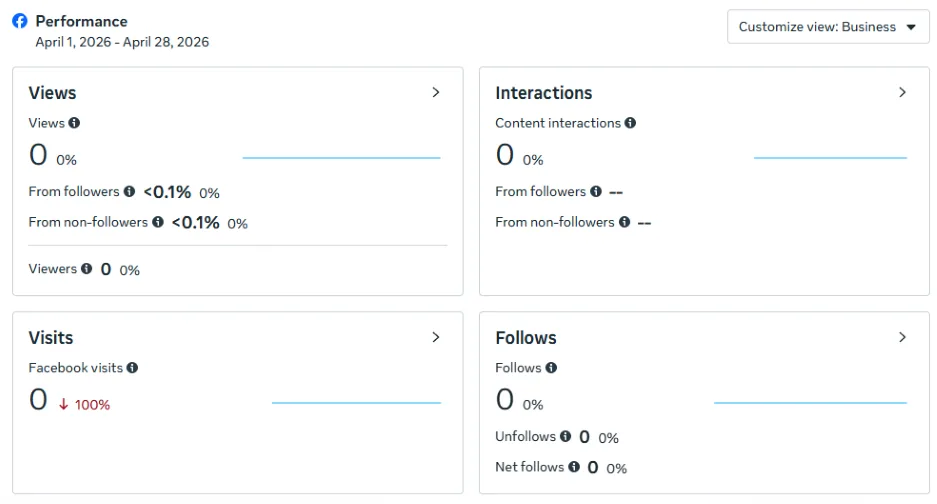
Your data will populate as you post new content.
These are the organic metrics you’ll want to monitor:
Reach: The number of people who saw your post without promotion.
Engagement: This includes likes, comments, shares, and saves.
Follower Growth: The number of new followers to your page.
Click-throughs: This means link clicks, profile visits, and/or CTA clicks.
Video metrics: Think average watch time, retention rate, and your 3-second views.
For all of these metrics, you need to keep an eye on your performance over time. Notice trends in good performance—whether that’s a certain time, type of post, or style of content—and double down there to keep growing.
You’ll also want to monitor performance on your paid campaigns. You can do this in the Ads Manager, on the main analytics dashboard. You’ll be able to see key performance data for all of your campaigns and ads in one place. There are a few key metrics you’ll track for paid:
Reach: The number of people who saw your ad.
Impressions: The number of times your ad was shown.
Click-through rate: The percentage of people who clicked your ad.
Cost per click: The amount you pay for each click.
Conversions: The number of desired actions taken, whether that’s purchases, sign-ups, or something else.
Return on ad spend: The revenue you generated compared to what you spent.
In order to keep track of these efficiently, you should leverage the built-in tools in the platform. They’ll provide deeper insights into user behavior and campaign effectiveness—which helps you get even more out of your Facebook marketing strategy.
Strengthen your Facebook marketing strategy
The goal of your Facebook marketing should be to leverage the platform and all it offers in order to grow your business. In this guide, we’ve outlined everything you need to know whether you’re looking to get started with Facebook marketing or invest in expanding your strategy this year.
The key is to take some time and figure out what works best for your business—and then keep going with that to build a solid Facebook marketing strategy that works for your business.
And when you’re ready to level up your Facebook marketing results, reach out! We’ll show you how our marketing solutions can help!


